


The bill, known as the AGOA Extension and Bilateral Engagement Act or AGOA 2.0, was submitted to the Senate and referred to the Committee on Finance, where no further action has been taken.
Its introduction coincided with a 43-day US government shutdown, which delayed legislative activity.
ADVERTISEMENT
The proposal surfaced during a briefing to South Africa’s parliamentary portfolio committee by the Department of Trade, Industry and Competition.
According to the department, the White House has signalled support for a shorter one-year renewal.
“It is expected that AGOA renewal will be a rollover of current AGOA benefits with existing members, meaning that SA may be retained in the programme,” the department noted.
Yet the department did not mention that Senator Kennedy’s version specifically excludes South Africa.
ADVERTISEMENT
US slams South Africa
Kennedy framed the bill as a tool to counter China’s economic reach across the continent.
“China is using Africa to expand its influence at America’s expense. We need to rethink our relationships in the region while strengthening trade with African countries that share our values,” he said, adding that AGOA must work for “America’s interests, not against them”.
If enacted, AGOA 2.0 would revive the trade programme for two years and require Washington to pursue bilateral agreements with selected African partners. It emphasises conditions such as democratic governance, human rights protections, and anticorruption measures.
ADVERTISEMENT
The bill also incorporates the senator’s earlier US-South Africa Bilateral Relations Review Act, which demands a complete assessment of Pretoria’s relationship with Beijing and Moscow.
South Africa faces imminent exclusion from AGOA
The Senate bill mirrors a similar proposal introduced in the US House of Representatives in April, but goes further by explicitly calling for South Africa’s removal.
It requires the US President to certify whether South Africa undermines American national security and mandates a classified list of South African officials who could face sanctions under the Global Magnitsky Act.
ADVERTISEMENT
This is the third attempt by US Republicans to penalise South Africa for its international alignments. Relations between the two governments have become increasingly strained since the Trump administration took office in February.
US snubs G20 Summit
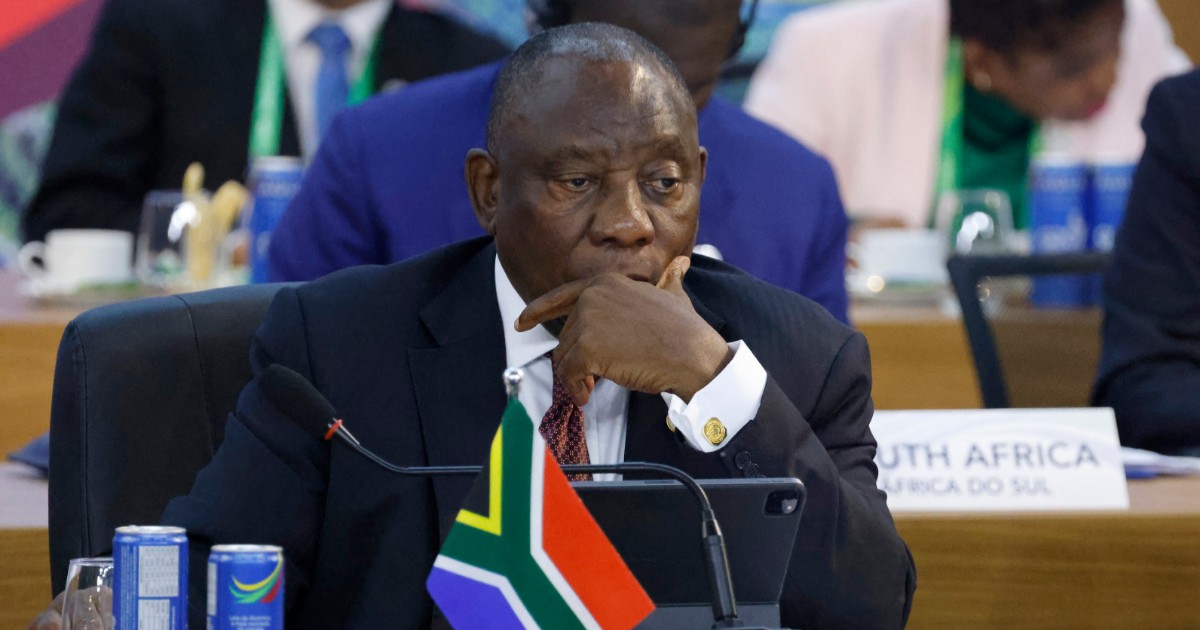
Tensions escalated at the weekend’s G20 Leaders’ Summit, where the US boycotted proceedings and pressed South Africa to avoid issuing a leaders’ declaration.
In a further point of friction, South Africa rejected a request for President Cyril Ramaphosa to hand over the G20 gavel directly to the US charge d’affaires.
ADVERTISEMENT
The handover is now expected to take place quietly on 25 November.