



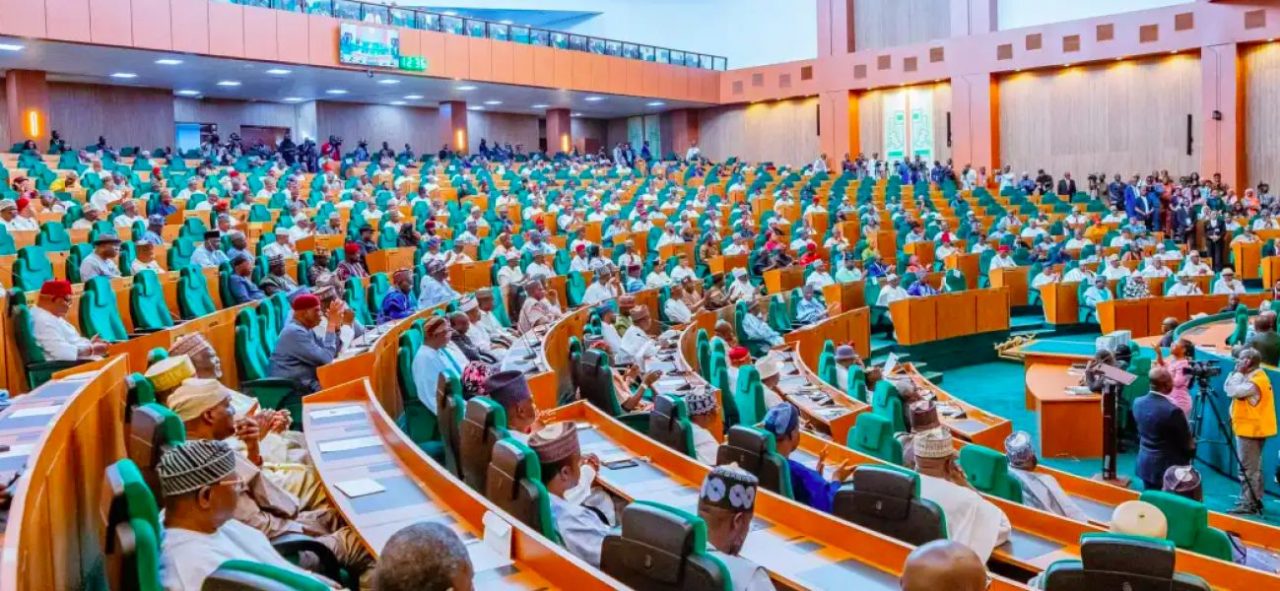

Nigerian women could gain as many as 156 additional seats across state and federal legislatures if the Reserved Seats for Women Bill currently before the National Assembly is passed and signed into law by the President
The proposed legislation seeks to amend the 1999 Constitution to create special seats for women in the National Assembly and state Houses of Assembly. Gender advocacy groups backing the bill describe it as a corrective, temporary and strategic intervention designed to address the decades-long imbalance in women’s political representation.
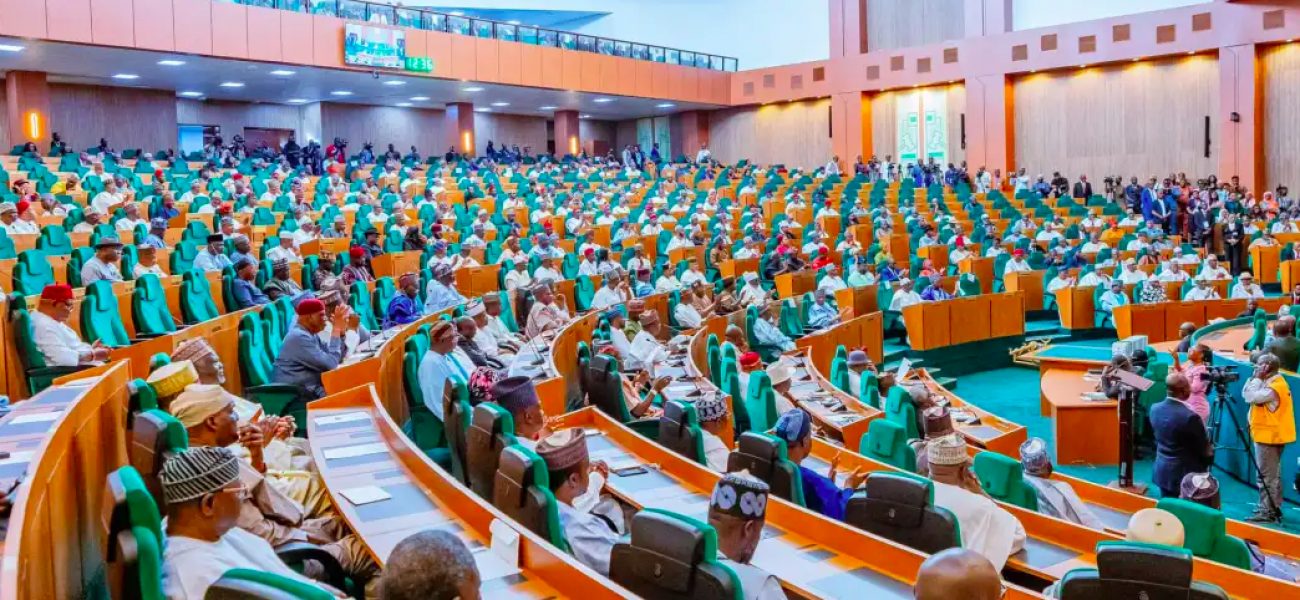
The original proposal recommends one reserved seat for women in both the House of Representatives and the Senate from each state, along with three reserved seats per state House of Assembly. However, it was gathered that the Senate is pushing for a modification that would provide one reserved women’s seat per geopolitical zone in the upper chamber instead of per state.
Speaking at a training session organised for members of the House of Representatives Press Corps by the House Committee on Media and Public Affairs in collaboration with the TOS Foundation, the Special Adviser to the Deputy Speaker on Legislative Matters, Chidozie Aja, dismissed claims that the bill was designed to push men out of existing elective positions.
“For emphasis, these seats will not replace existing seats, but will expand representation to create room for women at the table of decision-making. It is important, also to note that political parties will field only female candidates for these seats,” he said.
He explained that the bill was originally designed to run for four election cycles spanning 16 years, describing it as a temporary special measure. However, he revealed that adjustments currently being proposed may either completely remove the sunset clause or extend the duration.
“It is meant to last for 4 election cycle of 16 years in all. It is a temporary special measure. However, adjustments being proposed so far may either completely remove the sunset clause or extend the duration. Summarily, the Bill seeks to alter Sections 48, 49, 71, 77, 91 and 117 of the Constitution of the Federal Republic of Nigeria, 1999; and more recently recommended alteration of Section 42.”
Aja noted that while the approach is novel in Nigeria’s political space, it has recorded major successes in other countries across Africa.
“While this is novel in the Nigerian space, this approach has been used successfully by Rwanda, now the global leader with 61% women in Parliament. Other countries that have successfully implemented this approach, in various forms and mixes, include Tanzania, Uganda, Kenya, Burkina Faso and Senegal.”
He also addressed concerns about the actual numerical impact of the proposal on women’s representation at the national level, stating that even with an expansion of seats, the progress would still be modest but meaningful.
“It is important to note that even if additional 74 seats are granted in the Senate and House of Representatives, bringing the total number of seats to 543, it means that Nigeria will only secure 13.6% women representation in the national parliament. Not an outstanding progress, but significant.”
According to him, the global evidence clearly supports the idea that gender quotas improve governance outcomes.
“The evidence is clear, countries that adopt structural gender quotas tend to experience stronger representation, better governance, and improved development outcomes.”
Aja added that the bill would strengthen Nigeria’s democratic system because democracy performs best when all segments of society are represented.
He explained that democracy thrives on inclusion, noting that Nigeria’s democratic system is currently operating below its full capacity because of the wide gender gap. He stressed that women’s participation would make democracy deeper, more legitimate and more stable.
He further highlighted that multiple global studies show that when women are actively involved in governance, parliaments tend to pass stronger health policies, more education-focused laws, better social protection frameworks and more community-driven development initiatives. According to him, women’s presence ultimately improves the overall quality of governance.
Aja also described women as key players in peacebuilding, especially at the grassroots, explaining that their inclusion helps reduce conflict and strengthen community resilience. He added that gender inclusion should also be viewed as a powerful economic strategy.
He further cited findings from the McKinsey Global Institute, which estimates that Nigeria’s economy would witness significant growth if women were fully included in both political and economic life. The institute projects an overall economic gain of $22.9 billion and a 23 percent increase in GDP if Nigeria reduces gender inequality by 2025.
Follow Us on Facebook – @LadunLiadi; Instagram – @LadunLiadi; Twitter – @LadunLiadi; Youtube – @LadunLiadiTV for updates