


After Google introduced magnetic wireless charging support to the Pixel 10 earlier this year, we believed other Android companies would do something similar with their next devices. For OnePlus, that is not the case. MagSafe-style charging support can hold on for now, while the company prioritises battery performance.
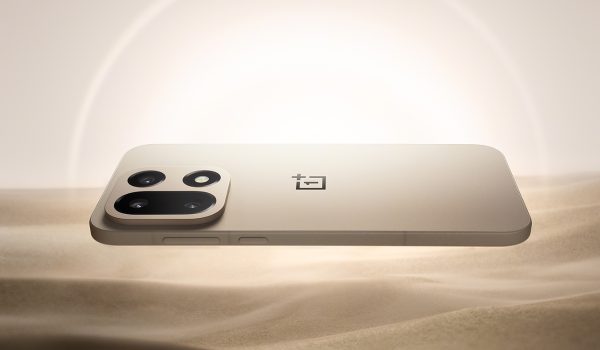
The company’s latest flagship that has been making the rounds — OnePlus 15 — made its global debut on November 13, 2025. Some known specs are a mammoth 7,300mAh battery with support for 120W wired charging and 50W wireless charging.

To fully utilise the charging speed, users will have to purchase a separate magnetic case, because the OnePlus 15 doesn’t come with any built-in magnets. Even the OnePlus 13 that launched in January was built similarly.
Why does OnePlus 15 not have Google Pixelsnap charging?
The company’s Senior Product Marketing Manager, Rudolf Xu, explains why OnePlus doesn’t use magnetic charging for its devices. According to him, magnets are too heavy and take up space. They instead use the extra space for a bigger battery.

After fitting the battery inside the phone, the space left is limited. Adding a wireless coil takes up space and including magnets will make it even more cramped. The device will be heavier than it should for comfort. To accommodate the magnets, the battery size has to be smaller. But if they do that, then the OnePlus 15 won’t have the title of the biggest battery in a smartphone. It boils down to priorities, sacrificing one feature for another to be evident.
The massive 7,300mAh battery of the OnePlus 15 is a 22% upgrade from the 6,000mAh cell in the OnePlus 13. Compared to Google Pixel 10 Pro XL that supports Pixelsnap wireless charging, it is 40% bigger than the 5,200mAh battery. It’s also larger than that of the iPhone 17 Pro Max, which is believed to have a 5,088mAh cell.

The OnePlus 15 is expected to offer better battery performance than the other three. What the company does though, is follow Samsung’s style. Samsung phones don’t support Qi2, but their cases do and they’re termed ‘Qi2-ready’. Using this method, the company offers an alternative to including built-in magnets.
Other than wireless charging, the OnePlus 15 case can easily be snapped onto a car-mounted charger. It can be snapped to a stand for easy navigation when checking the map. Even though the OnePlus 15 lacks Qi2 support, it compensates for this slower charging with a longer battery life and light weight.